
What Are Brand Guidelines? What to Include and When You Need Them

Content (before case study block):
With so many tools available these days, everyone fancies themselves a designer. Including Terry from Sales, who's just discovered he can change the font in PowerPoint. Terry's excellent at sales. Design, less so.
This is why brand guidelines exist. They give everyone working with your brand a clear set of rules, so your identity stays consistent whether it's being used by a designer, a new employee or someone updating a presentation two hours before a meeting.
Without them, even the best-designed brand can quickly become a collection of slightly different logos, questionable colour choices and creative interpretations of the original idea.
What are brand guidelines?
Brand guidelines are a reference document explaining how your brand should look, sound and behave across different applications.
You might also hear them called a brand book or brand style guide. The terms are often used interchangeably, although some documents are more comprehensive than others.
Whatever you call them, the purpose is the same: to make it easier for people to use your brand correctly, without needing to consult the designer every time they work with your brand.
What to include in brand guidelines
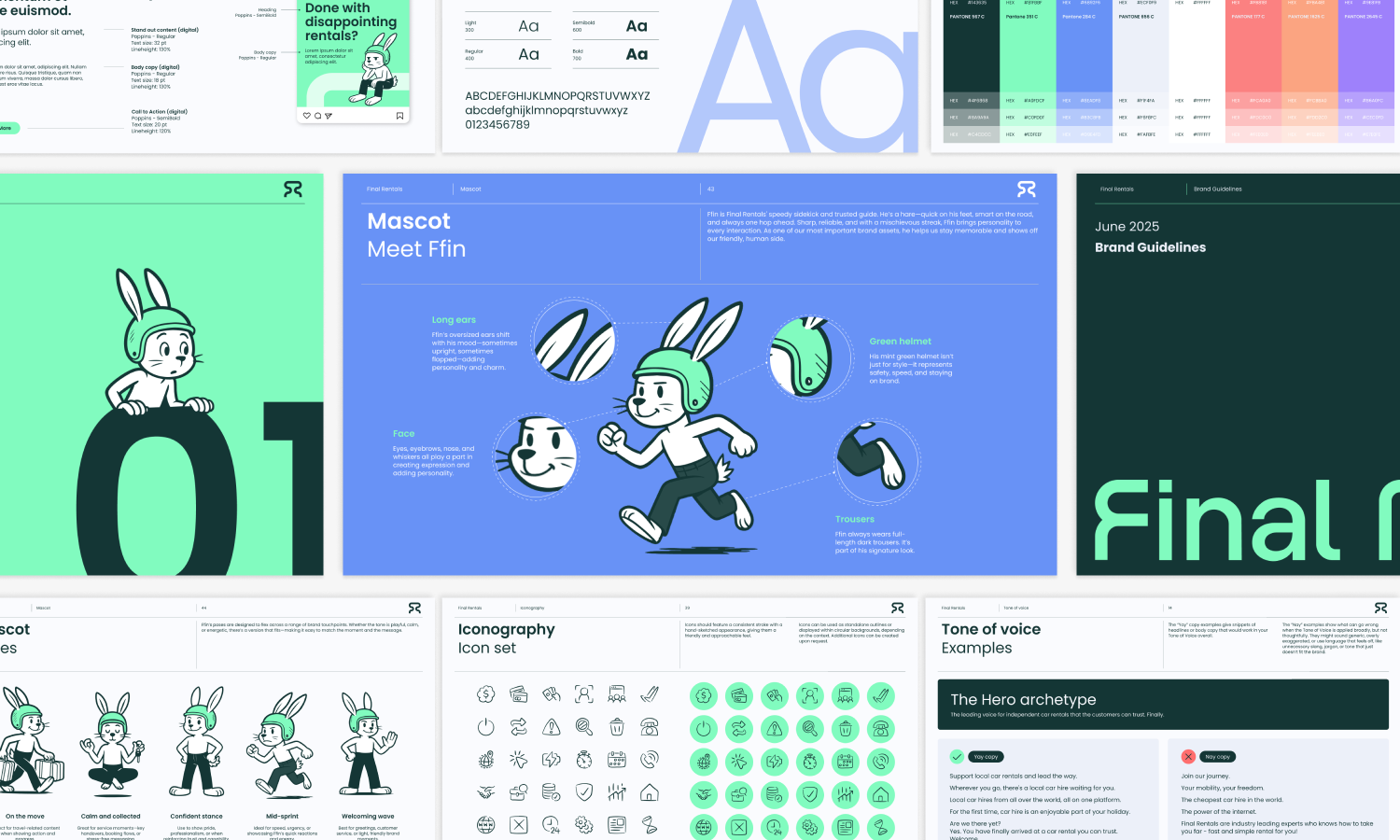
The contents will depend on your business, but a good brand style guide usually covers the essentials:
- Logo usage: The different versions of your logo, minimum sizes, spacing and examples of what not to do with it.
- Colour palette: Primary and secondary colours, with the correct codes for digital and print applications.
- Typography: Which typefaces to use, where to use them and how to create a clear visual hierarchy.
- Imagery and graphics: Photography style, illustrations, icons and any other visual elements that make your brand recognisable.
- Tone of voice: How your brand communicates, including its personality, language preferences and examples of messaging in practice.
- Real-world applications: Examples showing how everything comes together across presentations, social media, signage, packaging or other relevant materials.
Does every startup need a full brand book?
Not necessarily. A small startup with a handful of employees and relatively few brand touchpoints might need a condensed brand book covering logos, colours, typography and basic usage rules.
As the business grows, the requirements tend to grow with it. More employees, external agencies, marketing channels and physical locations mean more opportunities for inconsistency.
The important thing is to create guidelines that reflect how the business actually operates. A 70-page document nobody opens is much less useful than a well-designed eight-page reference everyone uses.
When does my business need brand guidelines?
Ideally, as soon as your brand identity is established. Even if you're a small team, having a clear set of rules from the outset can save a lot of questionable decisions later.
They're particularly important when you're bringing new employees on board, working with external agencies or expanding into new markets. The more people using your brand, the more room there is for interpretation.
Brand guidelines are also a natural part of a wider rebrand or repositioning project. Once the new identity and messaging are in place, guidelines ensure all that work doesn't unravel the moment it's handed over.
Brand guidelines in practice: Final Rentals
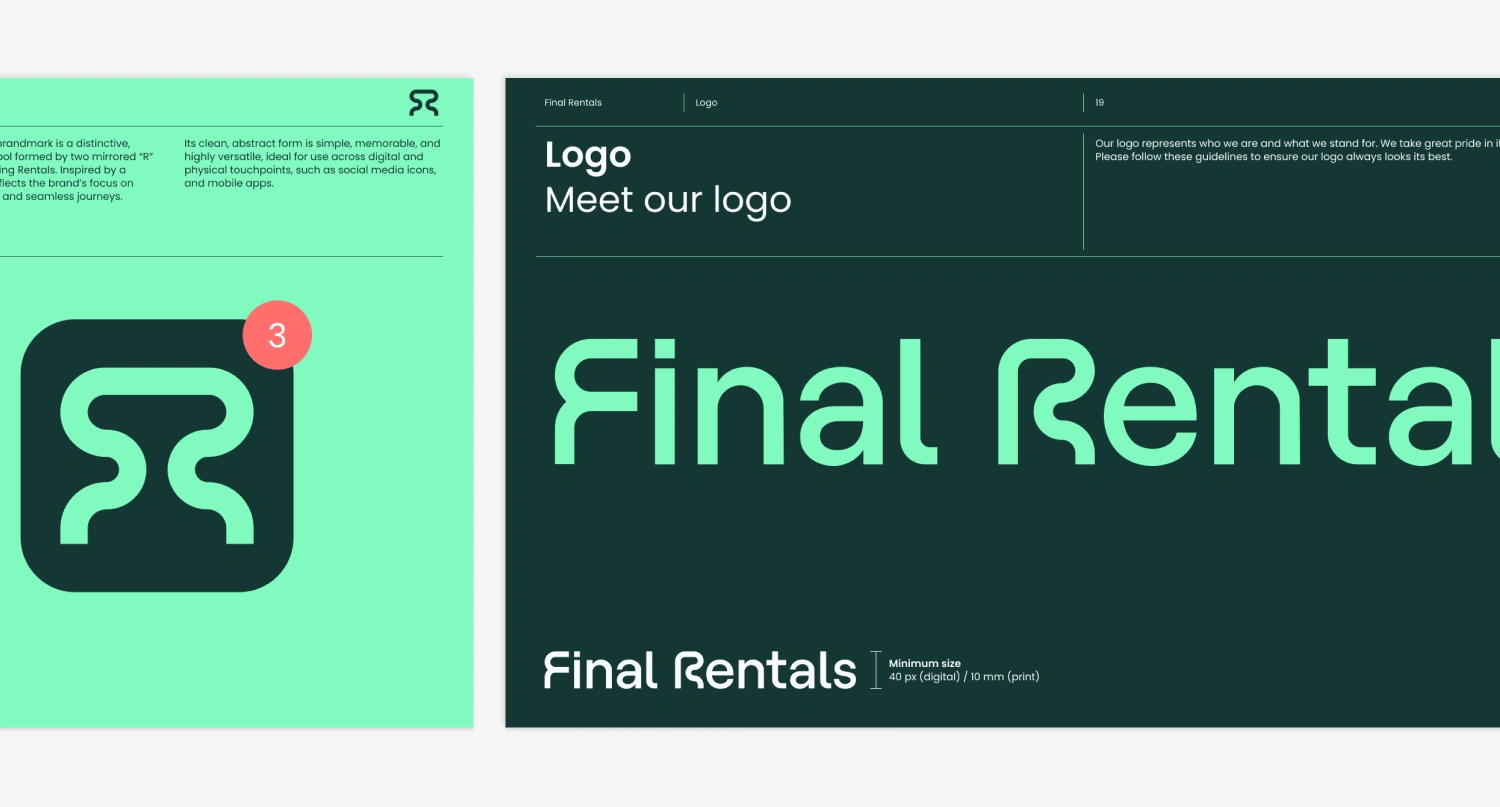
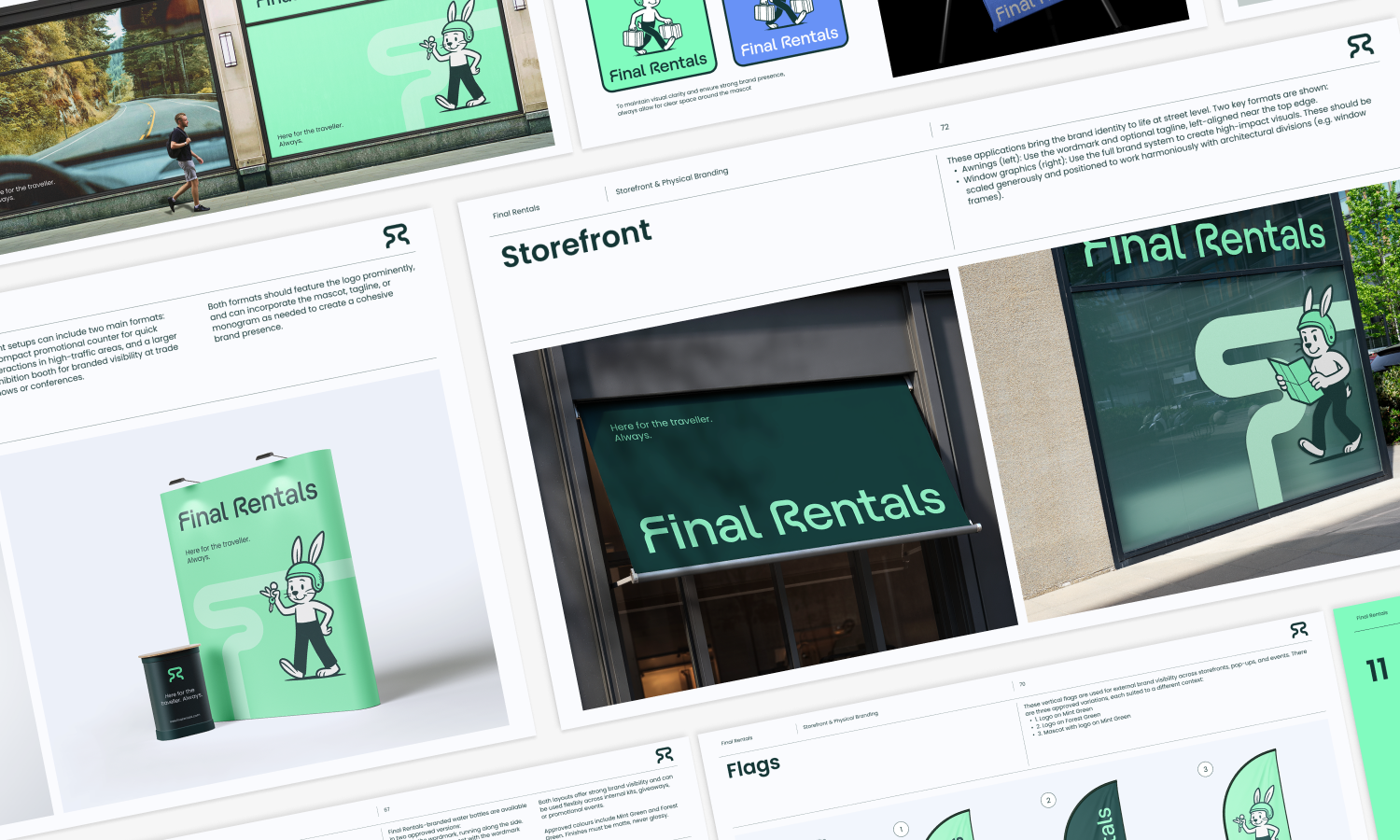
Final Rentals is an international car rental brand operating through a network of partners. With its identity appearing across airport offices, storefronts, merchandise and marketing materials, consistency is particularly important.
A single set of guidelines wasn't going to be equally useful to everyone. So, rather than producing one enormous document and hoping for the best, we created three versions tailored to how the brand would be used.
- The full brand guide provides a comprehensive reference for the identity, covering the visual system and its applications.
- The mini brand guide is a short cheat sheet designed for anyone who needs to check a colour code, typeface or logo rule without wading through the entire document.
- The merchandise and storefront guide addresses the practical needs of Final Rentals' partners, including how the identity should appear on signage at airport offices and branded merchandise.
Each serves a different purpose, but all three protect the same identity.
And the work didn’t stop at delivery—we continue to work with Final Rentals, developing additional guidelines as new requirements emerge.
How do you make sure people actually use brand guidelines?
Sending everyone a PDF and hoping for the best is one approach, but it’s not a particularly reliable one.
Ask the studio responsible for your identity to present the guidelines to your team. It's an opportunity to explain the thinking behind the decisions, demonstrate how to use the assets and answer questions before everyone starts improvising.
A brand style guide should also be easy to access and straightforward to navigate. If finding the correct logo requires a search through six folders and an email to Marketing, people will find their own solutions. Terry from Sales certainly will.
Over the following months, review how the brand is being applied, identify recurring mistakes and provide additional guidance where needed. Further down the line, a brand audit can help assess how consistently the identity is being used, and whether the guidelines need updating as the business evolves.
Good guidelines make a good brand easier to use
The value of brand guidelines isn't measured in pages. It's measured in how consistently people can apply the identity, even as the business grows and more people become involved.
At Immo Studio, we develop guidelines around the realities of each business, rather than handing over a document that looks impressive but rarely gets opened. If you're building a brand or wondering whether your current guidelines are doing their job, book an introductory call.
You can also explore what's included in a startup branding package for a closer look at the branding process.
What is the difference between a brand book and brand guidelines?
How long should brand guidelines be?
When should a startup create brand guidelines?
Who should have access to brand guidelines?
How often should brand guidelines be updated?