
What is Brand Strategy? Why Founders Need More Than a Good Idea

Brand strategy is the thinking that determines what a business stands for, who it speaks to and why anyone should choose it over the competition.
Think of it as the blueprint for a building. You can choose the materials, colours and finishes without one, but you'll run into problems when you start putting everything together. The same goes for branding.
For founders, this can be a particularly tricky conversation. After all, who knows the business better than the person who built it? But knowing your business inside out can sometimes make it harder to see what everyone else sees.

What does a brand strategy involve?
While every business is different, most strategies work through five fundamental questions:
- Purpose: Why does the business exist beyond making money?
- Audience: Who are we trying to reach, and what matters to them?
- Positioning: Where do we sit in the market, and why should someone choose us?
- Personality: How should the brand behave, sound and make people feel?
- Messaging: What do we need to communicate, and how do we make it meaningful?
Simple enough on paper. Less so when you put five people from the same business in a room and ask them to agree on the answers.
Why the brand strategy in your head isn’t enough
Most founders have spent years developing their businesses. They know every feature, advantage and reason their product or service deserves to exist. But familiarity has its drawbacks.
When you're that close to something, it's easy to assume everyone else understands it too. You might spend twenty minutes explaining a feature customers barely care about, or overlook something genuinely distinctive because it's become ordinary to you.
There's also the question of growth. When there are three people around a table, keeping everyone aligned is relatively easy. Add new employees, departments and external partners, and suddenly everyone has their own interpretation of what the brand stands for.
The problem isn't necessarily that the founder lacks a strategy. It's that the strategy hasn't been translated into something the rest of the business can use.
Brand strategy example: How Matoke found its story
Some of the most interesting brand strategy examples involve finding a clearer way to communicate what's already there.
Matoke is a UK medtech company developing infection care technology that doesn't rely on silver or antibiotics, in response to the global threat of antimicrobial resistance (AMR). When Matoke approached us, different people within the organisation were telling different versions of its story.
As Tom Crockett, Marketing Director at Matoke, explained, “As we prepared for engagement with major wound care companies, we realized our identity didn't reflect the depth of our mission and the strength of our innovation.”
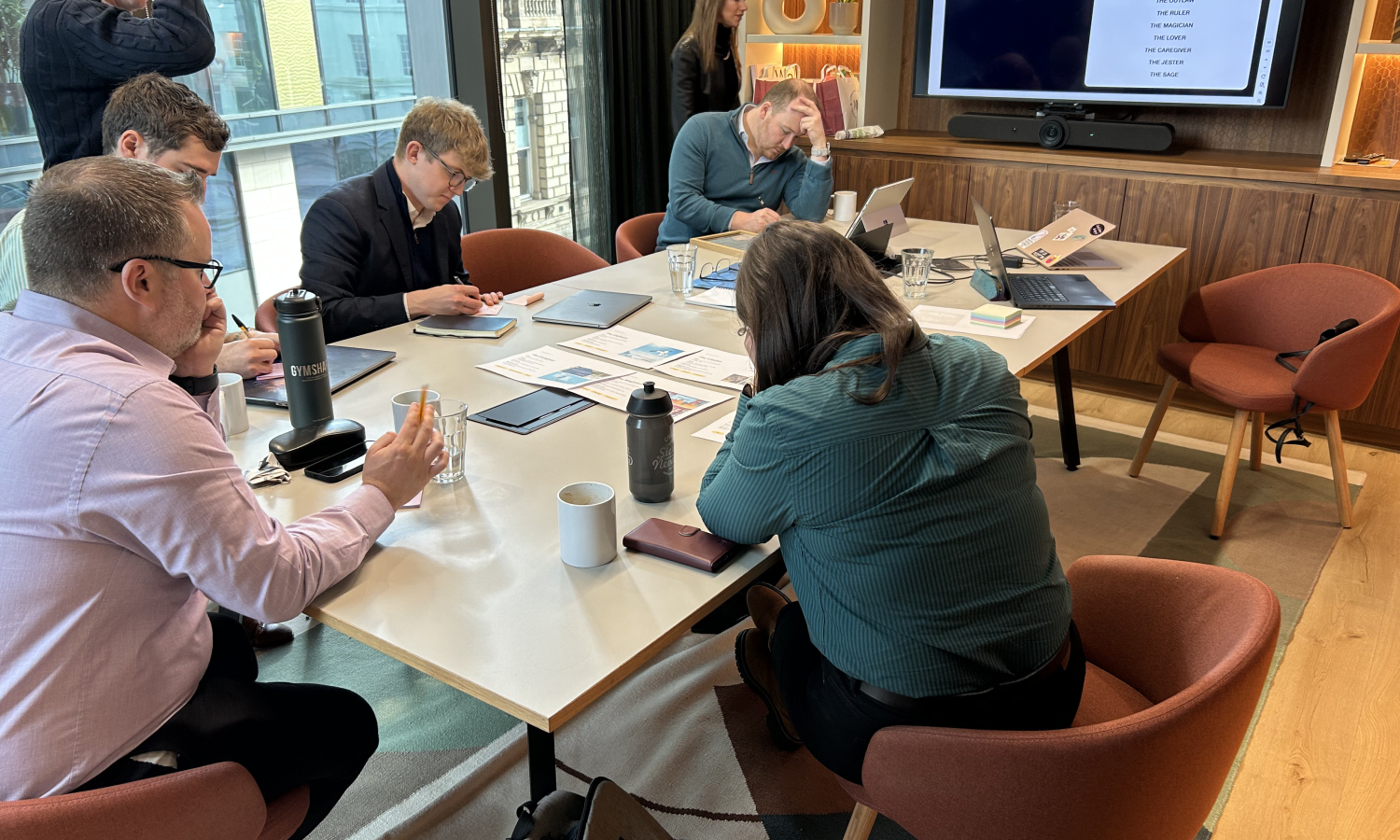
Over three weeks of workshops and a brand audit, we explored Matoke's purpose, positioning, audiences and ambitions. The challenge was identifying what would remain true as the business evolved. Two ideas emerged: a future free from antimicrobial resistance, and technology designed not to contribute to the problem.
These gave Matoke a clear brand positioning, whether speaking to investors, clinicians or commercial partners. They also informed the brand identity and tone of voice that balanced scientific credibility with a genuine sense of purpose.

Good brand strategy starts with better questions
Founders don't need an agency to tell them what their business does. They need the space and outside perspective to question what they think they know, and turn that knowledge into something the whole team can use.
That's how we approach brand strategy at Immo Studio. If your brand is still living largely in your head, perhaps it's time to book an introductory call with us so we can talk about getting it out into the open.
What is the difference between brand strategy and brand identity?
What makes a good brand strategy?
Do small businesses need a brand strategy?
How do you develop a brand strategy?
When should a business revisit its brand strategy?